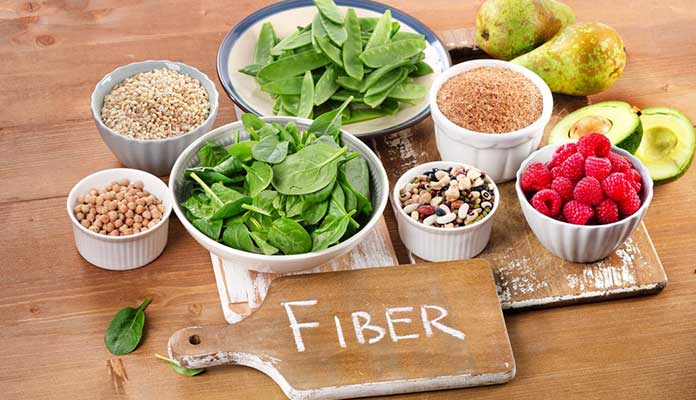

10Include More Fiber to Your Meal
Eating more fiber is usually recommended to people dealing with constipation. The reason is that it helps make your stool easier to pass by making it bulkier and improve your bowel movements consistency. As a matter of fact, a recent survey showed that about 77% of people struggling with chronic constipation find to increase their fiber intake beneficial. On the other hand, some reviews have found that supplementing with fiber did not provide the desired relief but made the problem worse.
While other studies have linked increasing dietary fiber intake can improve the bowel movement frequency, it fails to provide relief to other symptoms of constipation experienced – bloating, pain, stool consistency, and gas. Therefore, it’s paramount to know the type of dietary fiber to add to your meal for optimal results. Generally, dietary fibers are divided into mainly two categories:
Insoluble fibers: Whole grains, wheat bran, and vegetable contain this type of dietary fiber. They make your stool bulkier and ensure you pass them without hassle.
Soluble fibers: found in seeds lentils, nuts, oat bran, peas, and barley, including some vegetables and fruits. They help soften the hard stools and promote consistency due to their ability to absorb water.
Thus, people being constipated should go for a non-fermentable soluble fiber, and consume both insoluble and soluble fiber to prevent constipation. [10]