
2Partial Seizure Versus Generalized Seizure
In general, seizures can be classified into two types: generalized seizures and partial seizures. They can sometimes appear to be relatively similar, but there are still many significant differences:
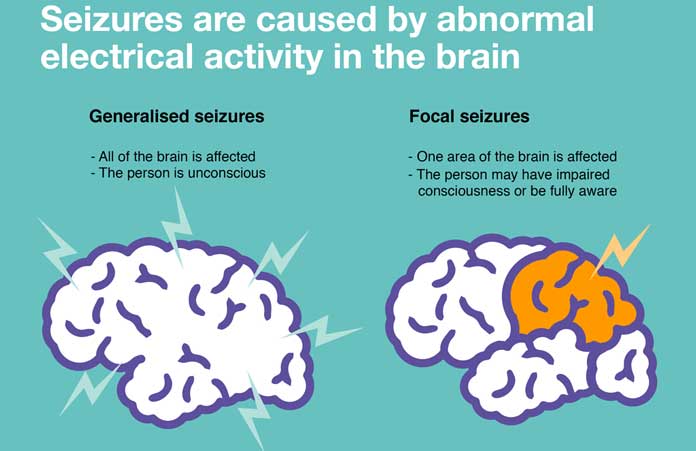
– A generalized seizure often starts with widespread unusual electrical activity in the whole brain, while a focal seizure only affects a small area.
– A focal seizure would lead to residual signs of weakness once it is over, whereas a generalized seizure often does not.
– Muscle tightness or spasms on one part of the leg, arm, and face is a common symptom of focal seizures. Generalized seizures are typically characterized by whole-body convulsions or a loss of consciousness.
– On EEG testing, a focal seizure tends to cause abnormal electrical activity in a particular brain area, while a generalized seizure might trigger a more widespread pattern.
Keep in mind that you can have both generalized seizures and focal seizures at the same time. [2]