
6Bone Density Test
Bone density is a medical term describing the number of bone minerals like calcium in bone tissue. Before the age of 25, our bodies consistently produce essential collagen and minerals to form new bones. At this moment, bone formation outpaces bone breakdown. Afterward, bone density reaches a balance and remains stable until 50. After 50, bone breakdown accelerates, and bone density gradually declines. It is especially the case for women after menopause. As a result, people will have a higher risk of fractures, osteoporosis, osteonecrosis, bone infections, and other bone conditions.
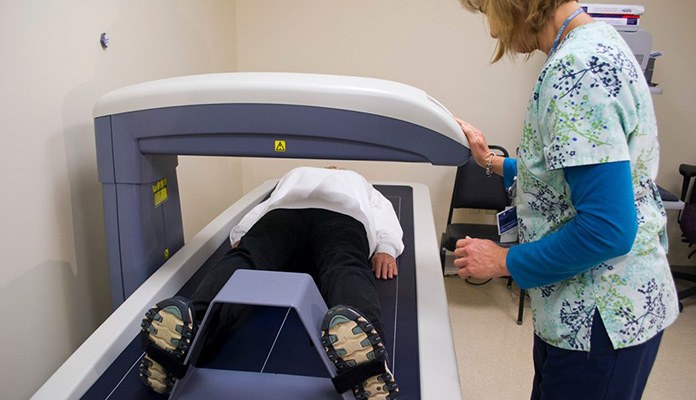
DEXA (dual-energy X-ray absorptiometry) scan is a simple and non-invasive way to measure bone density. Healthy bone density results fall into the T-score range of -1 to +1. A T score between -1 to -2.5 is considered a sign of osteopenia (low bone density). The recommended timeframe to carry DEXA test is once every two years for:
- Woman aged 65+
- Man aged 70+
- A person with broken bones after 50 years old [6]