
Common Facts about Raw Honeycomb

2Components of a Honeycomb

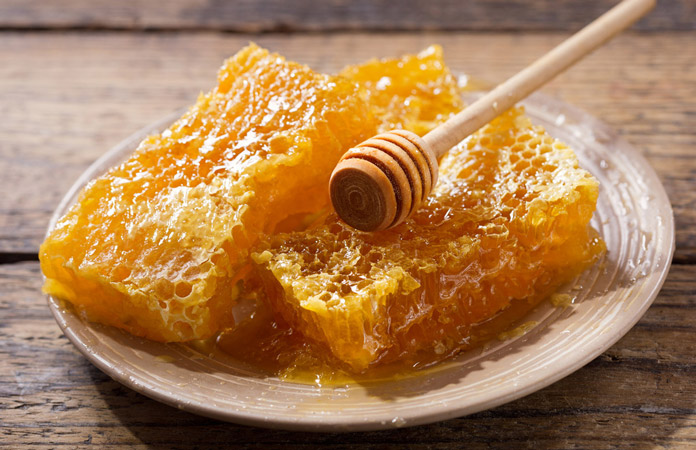
Macroscopically, the honeycomb is made up of the honey and the beeswax, which is a constructive hexagonal structure that houses the bees and honey. The worker bees make the beeswax from a lot of honey and pollen with the help of some special wax producing glands in their abdominal segments at a suitable temperature.

Chemically, beeswax is a complex substance, composed of more than 300 different substances. The main chemical elements that compose it are carbon (73.3%), hydrogen (13.2%), and oxygen (7.5%). It contains esters of higher fatty acids with higher monohydric alcohols, saturated hydrocarbons, free fatty acids, aromatics, water, stains, and other minerals. The composition can be changed depending on some of the genetic features of the colony or under the influence of the environment. When melting the honeycomb, it is enriched with additional impurities from propolis, pollen, and honey, which increases its useful bioinfluence. The chemical composition of beeswax is too complicated. It contains about 15 different chemical compounds, which are divided into three groups: free fatty acids (13.5 to 15%), esters (70.4 to 74.7%), and limit saturated hydrocarbons (12.5 to 15.5 %). Furthermore, the composition of beeswax includes small quantities of dyes and essential oils that determine its color and smell. [1]

Related Articles

10 Healthy Lunch Ideas That Keep You Fit And Full

Food & Nutrition
Your dietitian would have prescribed you to stick to a strict and inflexible diet regime. There is nothing inherently wrong with that. However, you might be forced to gobble up increasingly unsavory, albeit healthy, foods that would leave you...

12 Healthy Gluten-Free Foods You Can Eat

Food & Nutrition
Gluten can be said to be a group of proteins, or a mixture of two proteins termed prolamins and glutelins. These proteins are stored with starch in the endosperm of different cereal grains such as oats, wheats, barley, rye,...

10 Best Vegan Protein Food Sauces

Food & Nutrition
More and more people are reducing the consumption of animal products by following vegan or vegetarian diets. This trend might come from religious, animal welfare, or health reasons. A common concern for many people is that they might not...

10 Amazing Benefits of Vitamin D

Your Health
Vitamin D is an important element that can be produced in the skin under the sunlight. In addition, the body can absorb the mineral certain several supplements and foods. It is in the same group of fat-soluble vitamins, along...

10 Amazing Ginger Shot Benefits

Food & Nutrition
Ginger shots are drinks concentrated from fresh ginger and other ingredients like cayenne pepper, turmeric, or lemon and orange juice. They are available at any health food or grocery store in pre-made bottles or boxes. Due to high concentrations...

Health Benefits of Strawberries

Food & Nutrition
Originated in Europe around three centuries ago, strawberries are a hybrid of two wide strawberry varieties from South and North America. They are typically sweet, juicy, and bright red. People around the world love these fruits because they are...

5 Things to Know About Probiotics

Food & Nutrition
What Are Probiotics? Probiotics are basically living microorganisms that have many health benefits when ingested. Most of them are bacteria, but several forms of yeasts would also serve as probiotics. You would get them from fermented foods and supplements. Common...

Dairy and Inflammation

Food & Nutrition
Dairy is a popular part of every meal all over the world. However, many people are worried that it can trigger many inflammatory responses in the body and lead to certain health issues. In fact, this is still a...