
5Metabolism in Type 2 Diabetes
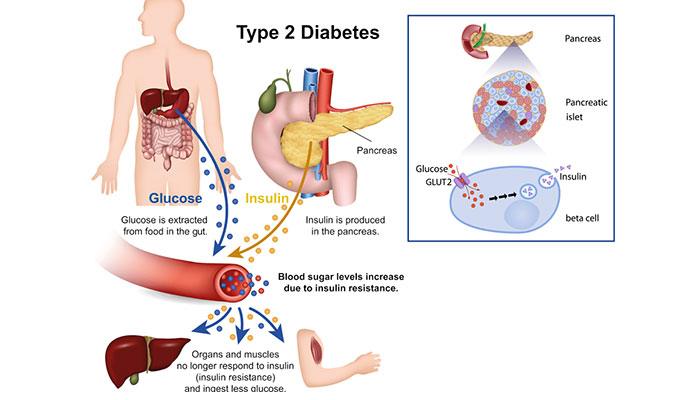
It is estimated that approximately 90 to 95 percent of diabetes cases are type 2 diabetes. This condition happens when the body resists insulin. It means the body cells stop responding to insulin, which causes the levels of blood sugar to remain elevated. The pancreas releases more insulin to compensate for this. However, the overproduction may cause damage to the beta cells in the pancreas. As a result, this organ is unable to release sufficient insulin to reduce blood sugar properly. When levels of blood sugar remain high but are not high enough for a diagnosis of type 2 diabetes, it is known as prediabetes. [6]
Effects of Diabetes on Protein Metabolism
In addition to carbs, protein may also work as a source of energy in the body. In certain cases, the body may break down protein and turn it into amino acids. This metabolic process occurs in its own muscles to get energy. Some studies have shown that patients with type 1 diabetes who do not get sufficient insulin from the medication would experience a significant loss of muscle mass. This effect is not noticed in those with type 2 diabetes, though. [7]