
Pullup vs. Chinup: What’s the Difference?

8Which Exercise Is Better?

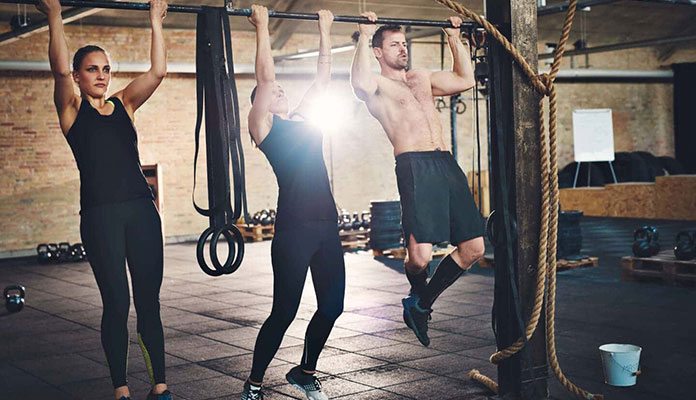
If you are hesitant between pullups and chin-ups, it is good to know that no exercise is better than the other. Overall, they are both quite challenging and great for improving your upper body strength. Whether pullups or chin-ups are better will depend on certain factors, such as your fitness goals, muscle patterns, body proportions, and workout routine. Studies have shown that pullups activate the same muscle groups as chin-ups, but the focus is different. While pullups target muscles in the shoulders and back more, chin-ups put more focus on those in the chest and arms. [9]

Related Articles

Doing Pull-Ups Everyday – All Pros & Cons

Fitness & Wellness
Pullups are one of the most effective and popular exercises to improve the strength of the biceps and upper back. Like other exercises, many people try to do pullups on a daily basis to maximize their improvement. Nevertheless, this...

Drinking Alcohol after a Workout – Is It Bad for You

Your Health
After a sweaty training session, you may want to refresh or reward yourself with a glass of cold beer or wine. But is that a good idea? In this article, we will dive into some possible effects of alcohol...

Arm Workouts At Home: Try These 10 Exercises

Fitness & Wellness
Zottman Curl The Zottman curl targets the forearm muscles, which are important for grip strength and lifting power. Start by standing with both feet apart, both arms at the sides, elbows close to the body, and palms facing out. Hold...

12 Ways To Get A Good Leg Workout at Home

Fitness & Wellness
Lateral Lunge The lateral lung involves a side-to-side movement that may help improve the body’s strength and stability. To begin with, stand with both feet wider than hip-width apart. Bend the right knee to sit back to the right hip...

Deep Squat: Benefits, Muscles Worked, & How to Do It

Fitness & Wellness
What Is Deep Squat? A deep squat is a form of squat in which the hips should be below the height of your knees when you are at the lowest depth. On average, the knee’s angle in this exercise is...