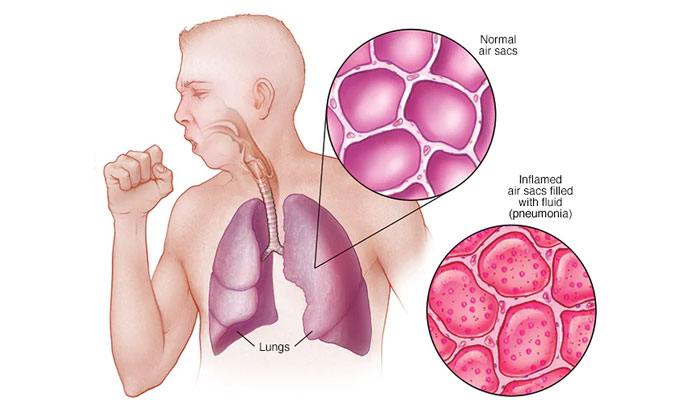

4Pneumonia
Pneumonia may also cause blood in the saliva. It occurs when fungi, viruses, or bacteria cause an infection in one or two lungs. This results in inflammation of the air sacs, making it harder to breathe as usual. Common symptoms include nausea, fatigue, chest pain, shortness of breath, chills, fever, shallow and quick breathing, or bloody sputum. Bacterial and viral pneumonia may be contagious through inhalation of droplets from a cough or sneeze. To treat pneumonia, your doctor may prescribe antibiotics, cough medications, or pain relievers, such as acetaminophen, ibuprofen, or aspirin. [5]
Bronchitis
Bronchitis occurs when the bronchial tubes, which transport air to the lungs, are inflamed and swollen. It may affect lung function and lead to difficulty passing air in or out of the lungs. Bronchitis can be acute or chronic. In people with chronic bronchitis, persistent inflammation may cause frequent coughing that leads to blood in the sputum or saliva. Other symptoms may include fatigue, chills, slight fever, shortness of breath, or chest discomfort. [4]