
4Diagnosis of H. Pylori Infection
Techniques to diagnose H. pylori infection can be divided into invasive and non-invasive.
No-invasive Detections
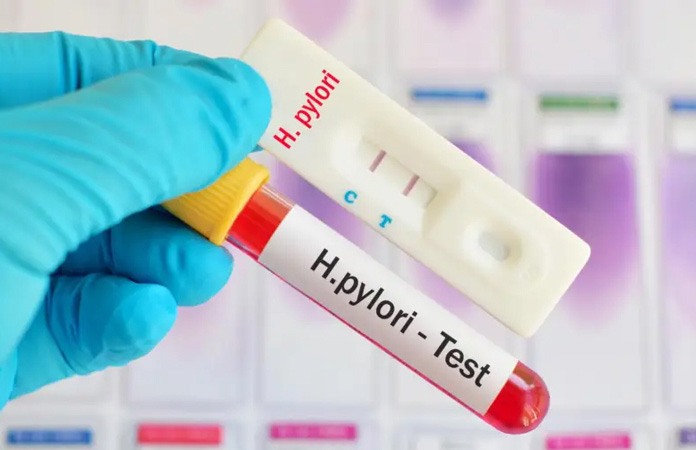
Serology
The infection with H. pylori will trigger local and systemic immune responses in the body to release antibodies and fight off the foreign invaders. Enzyme-linked immunosorbent assay (ELISA) is the most employed method to detect H pylori-specific IgG and IgA antibodies in human serum. However, serology can only confirm that you have had or are having H. pylori infection. Meanwhile, it may also have a high possibility of false-positive or negative.
13C- or 14C-urea breath test (UBT)
The breath test is the most accurate approach to detect H. pylori infection. People should avoid taking any antibiotics or ulcer-healing drugs before the breath test as it may interfere with testing results. A breath test involves taking an oral pill that contains carbon-labeled urea. If there is an infection, the H. pylori bacteria will convert carbon-labeled urea to labeled carbon dioxide, which will exhale out during the breathing process. Your doctor will collect your breath sample and detect the existence of H. pylori bacteria.
UBT has limitations as well. First of all, the test is not suitable for people who had gastric surgery in the past. Secondly, oral bacteria can also lead to a possibility of false-positive. Last but not least, UBT requires an expensive isotope ratio mass spectrometer to detect labeled carbon dioxide, which prevents it from being widely applied in clinics.
Invasive Detection
Invasive techniques to diagnose H. pylori infection include endoscopy for rapid urease test, gastric biopsies, bacterial culture, and polymerase chain reaction (PCR). These are professional medical procedures that need trained medical staff to operate. Hence, the approaches above are less common for initial diagnosis. [4]