
6Hiatal Hernia
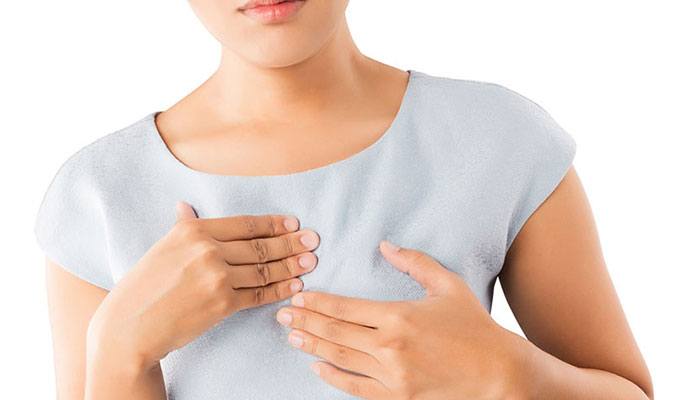
Hiatal hernia is when the stomach moves up into the chest through the esophageal opening in the diaphragm (the diaphragm is the muscle separating the abdomen from the chest.) A hiatal hernia may weaken the lower esophageal sphincter (LES) and increase the risk for gastroesophageal reflux. The opening in the diaphragm helps support the lower end of the esophagus. Having a hiatal hernia may allow stomach contents to reflux more easily into the throat. Coughing, vomiting, straining, or sudden physical exertion can cause increased pressure in the abdomen, resulting in hiatal hernia; this pressure could also lead to heartburn and acid reflux. [5]